
What are ground cracks during construction?
The construction joint is not a real "joint", it is a joint surface between the concrete poured after the initial setting time and the concrete poured first according to the design requirements or construction needs.
Temperature stress crack treatment
The main reason for this kind of cracks is the excessive temperature difference between the foundation and the concrete inside and outside, or the stress release due to other reasons.
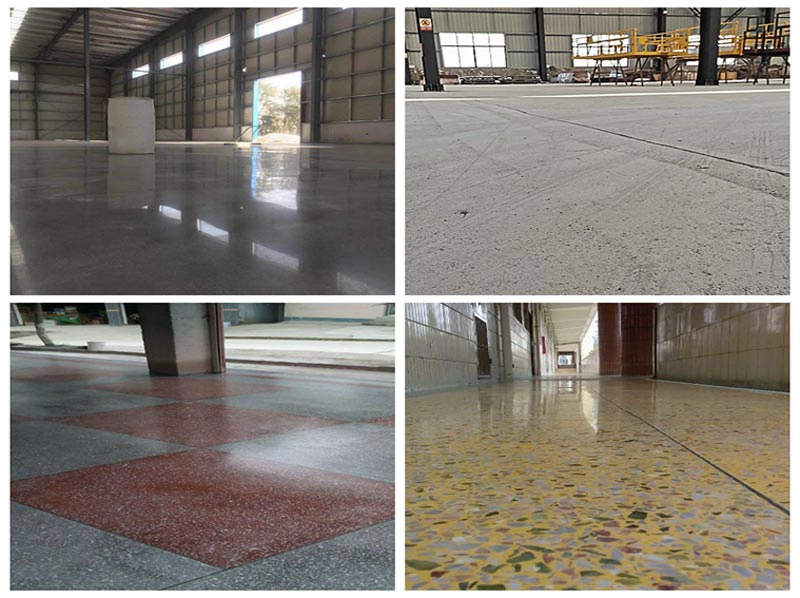
It can be divided according to the different manifestations. There are three types: surface cracks, deep cracks, and through cracks. Under certain conditions, surface cracks will develop into deep cracks, and deep cracks will also develop into through cracks. Therefore, if the cracks are not repaired in time, it will directly affect the decorative effect of the epoxy floor.
According to the structural layout, geological conditions, construction layout, construction intensity, etc., the horizontal joints set in the structure, in order to meet the requirements of structural deformation, there should be no rigid filling between the joint surfaces. Because the expansion joints need to meet the stress changes of the overall building, elastic materials are required for the treatment of the expansion joints, and metal sheets are laid on the outside for protection.
Base surface treatment equipment
1. Vacuum cleaner: remove dust on the ground.
2. Milling machine: used for milling to remove the old paint layer, oily layer, etc.
3. Shot blasting equipment: used for shot blasting of large-area concrete, terrazzo, hardened and wear-resistant floors, marble and other substrate surfaces.
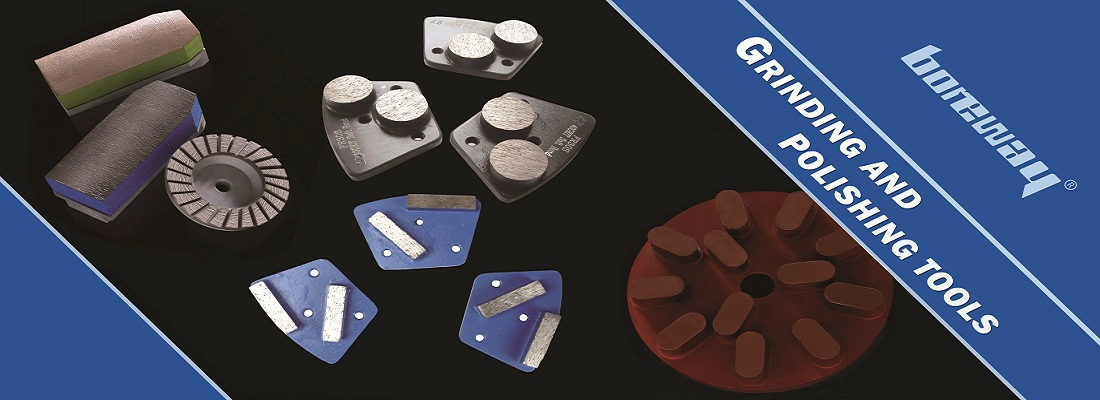
4. Grinding machine: equipped with diamond grinding knife, used for grinding the surface of substrates such as concrete, terrazzo, hardened and wear-resistant floors, and marble.
5. Portable grinder: used to polish the surface or corners of substrates such as small areas of concrete, terrazzo, hardened wear-resistant floors, marble, etc., and can also be used to remove small areas of old paint and oily layers.
The three epoxy floor anticorrosive paint cracking methods mentioned above, expansion joints and construction joints are artificially set to meet the changes in concrete stress, and temperature stress cracks are caused by changes in the stress of concrete itself.
Epoxy floor is a kind of high-strength, wear-resistant,the beautiful floor has the advantages of no joints, solid texture, good durability, anti-corrosion, waterproof, dustproof, convenient maintenance, and low maintenance cost.
Epoxy floor is mainly epoxy primer, epoxy Middle coating, (Trapezoid 1/2 PCD Disc For Suppliers)penetrating curing agent, water-based epoxy, initially used for functional floors: such as anti-corrosion, abrasion resistance, and non-slip, developed to general industrial floors; in addition to functional requirements, it also has decorative effects .
Polyurea is composed of two components: isocyanate and amino compound. These two components have extremely high chemical activity. After mixing, they react quickly and instantly cure. Therefore, it requires special high temperature and high pressure impact mixing equipment for the two components of polyurea. The rapid chemical reaction is effectively controlled.